

师资队伍
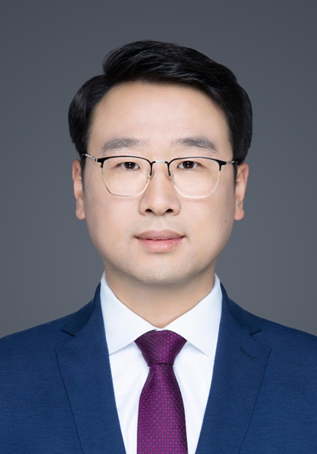
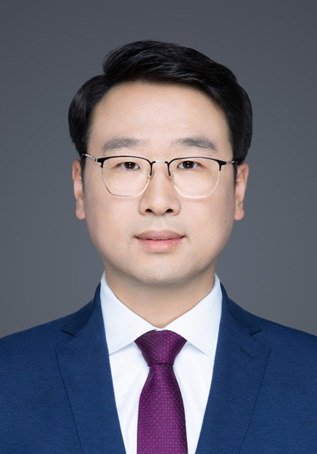
李扬副教授
一、个人简介:
1996.9 – 2000.7 内蒙古农业大学,生物工程系,学士
2000.9 – 2003.7 内蒙古大学,生命科学院,硕士,导师:旭日干院士
2003.9 – 2007.7 北京大学基础医学院,博士,导师:李凌松教授
2014.9–2016.8 加拿大多伦多大学,Sunnybrook研究所,博士后 合作导师:Juan Carlos Zuniga-Pflucker教授
2007.8 – 至今 北京大学基础医学院细胞生物学系,讲师,副教授,博士生导师,独立PI
二、研究方向:
1. 人多能干细胞疾病模型的构建
2. 人多能干细胞分化的分子调控机制
3. 人多能干细胞定向NK、T细胞分化在肿瘤免疫治疗中的应用
三、主持科研基金项目:
1. 北京市自然科学基金重点研究专题项目(Z240019),基于NK细胞活化、记忆样分化调控机制的iPSC来源急性髓系白血病CAR-NK开发,2024/07-2028/06,50万,课题骨干
2. 国家自然科学基金面上项目(32371533),天然产物红景天苷调控人iPSC-CAR-NK细胞分化及功能应用于肿瘤免疫治疗的研究,2024/01-2027/12,60万,主持
3. 国家自然科学基金原创探索项目(82350105),小分子化合物调控人多能干细胞来源NK细胞分化发育的机制探索及抗肿瘤功能验证,2024/01-2026/12,50万,课题骨干
4. 国家重点研发计划(2022YFC2702704),精子发生障碍病因学及临床防治研究,2022/12-2025/12,70万,课题骨干
5. 北医-密歇根临床医学转化研究专项(BMU2023JI002),基因编辑治疗 II 型Usher综合征的研究,2024/01-2026/01,68万,主持
6. 科技部战略性国际科技创新合作重点专项(SQ2018YFE020530-04),分子影像指导的纳米机器人药物体内行为、疗效和安全性评价,2019/08-2022/08,90万,主持
7. 国家重点研发计划(2017YFA0104003),利用小分子化合物诱导体细胞重编程并获得功能性的肝实质细胞,并对其分子机制进行研究,2017/07-2021/12,284万,课题骨干
8. 国家自然科学基金面上项目(31571517),人X-SCID诱导多能干细胞定向T细胞分化模型的建立及疾病发生机制、治疗的研究,2016/01-2019/12,78万,主持
9. 北京市自然科学基金(7192091),利用CRISPR和iPS技术制备通用型CAR-T细胞应用于肿瘤免疫治疗的研究,2019/01-2021/12,20万,主持
10. 北京市自然科学基金面上项目(5112019),Oct4磷酸化位点的确定及其在细胞重编程中的功能研究,2011/01 -2013/12,11万,主持
11. 国家自然科学基金青年科学基金项目(31000653),Oct4磷酸化位点的确定及其在细胞重编程及胚胎干细胞自我复制中的功能研究,2011/01-2013/12,20万,主持
12. 教育部博士点基金(20100001120044),Oct4磷酸化位点的确定及其在细胞重编程中的功能研究,2011/01-2013/12,3.6万,主持
四、 科研获奖:
1. 2023年辽宁省科技进步一等奖(第二完成人)
2. 2023年基础医学院论文优秀奖、转化医学奖
3. 2022年中华医学科技奖三等奖(第二完成人)
4. 2014年基础医学院青年学者奖励基金
5. 2012、2013年基础医学院SCI 论文引用奖
6. 2009年基础医学院教学竞赛二等奖
五、专利:
1. 李扬;兰峰;李厚鹏;人多能干细胞培养基及人多能干细胞的培养;2016-4-6,中国,CN201410190561.2
2. 李扬;兰峰;重编程培养基、其制备方法及重编程细胞的方法,2016-3-16,中国,CN201310585820.7
六、教材编写:
1. 参编《医学细胞生物学》第三版,北京大学医学出版社,杜晓娟主编(2016年);
2. 参编《医学分子细胞遗传基础》,北京大学医学出版社,乔杰,高国全,左伋主编(2024年)。
七、 研究论文:
1. Huang Z, Liu R, Wubulikasimu Z, Zhao W, Huang J, Wang J, Fan R, Kong W, Cui Q, Li Y*, Zhou Y*. Comprehensive profiling of N6-methyladnosine (m6A) readouts reveals novel m6A readers that regulate human embryonic stem cell differentiation. Advanced Science .2026. 13(18): e10075.
2. Pang H, Wang L, Li Y*, Zhou Y*. Deep Learning Model and Omics Screening Highlight Angiotensinogen as a 5-Methylcytosine (m5C)-Regulated Mediator of Tumor-Microenvironment Communication in Liver Cancer. Frontiers in immunology ,2026. 17:1752802.
3. Zhe X, Zhang L, Ding R, Zhang Y, Hao F, Liu D*, Li Y*. Chemical reprogramming regulates Tip60 expression to improve cleavage rates in somatic cell nuclear transfer reconstituted embryos of cashmere goats. Frontiers in Veterinary Science ,2025. 12:1720533.
4. Cai R, Lu B, Zhao X*, Zhou S*, Li Y*. iPSC-derived NK Cells Engineered with CD226 Effectively Control of Acute Myeloid Leukemia. Experimental Hematology & Oncology . 2025. 14 : 93.
5. Liu R, Wubulikasimu Z, Cai R, Meng F, Cui Q, Zhou Y*, Li Y*. NAT10-mediated N4-acetylcytidine mRNA modification regulates self-renewal in human embryonic stem cells. Nucleic Acids Research . 2023. 51(16):8514–8531.
6. Meng F, Zhang S, Xie J, Zhou Y, Wu Q, Lu B, Zhou S*, Zhao X*, Li Y*. Leveraging CD16 fusion receptors to remodel the immune response for enhancing anti-tumor immunotherapy in iPSC-derived NK cells. Journal of Hematology & Oncology. 2023. 16: 62.
7. Deng L, Yi S, Yin X, Li Y*, Luan Q*. Downregulating MFN2 Promotes the Differentiation of Induced Pluripotent Stem Cells into Mesenchymal Stem Cells through the PI3K/Akt/GSK-3β/Wnt Signaling Pathway. Stem Cells and Development . 2022.31:181-194.
8. Deng L, Yi S, Yin X, Li Y*, Luan Q*. MFN2 knockdown promotes osteogenic differentiation of iPSC-MSCs through aerobic glycolysis mediated by the Wnt/β-catenin signaling pathway. Stem Cell Research & Therapy . 2022. 13:162.
9. Chen E, Brauer P, Martinez E, Huang X, Yu Y, Anderson M, Li Y*, Zuniga-Pflucker JC*. T-cell receptor β-selection is required at the CD4+CD8+ stage of human T cell development. The Journal of Immunology . 2021. 206(10): 2271-2276.
10. Zhou S, Wu J, Huang X, YuN, Zou X, SinghJ, Bo Song B*, Li Y*. Cellular uptake of a cationic amphiphilic fluorophore in the form of assemblies via Clathrin-dependent endocytosis. Materials & Design .2021. 200: 109464.
11. Yi S, Huang X, Zhou Y, Zhou S, Anderson M, Zuniga-PfluckerJC, Luan Q*, Li Y*. E2A regulates neural ectoderm fate specification in human embryonic stem cells. D evelopment . 2020.147: dev190298.
12. Zhou S, Zhao H, Feng R, Ding L, Li Z, Deng C, He Q, Liu Y*, Song B*, Li Y*. Application of amphiphilic fluorophore-derived nanoparticles to provide contrast to human embryonic stem cells without affecting their pluripotency and to monitor their differentiation into neuron-like cells. Acta Biomaterialia . 2018. 78:274-284.
13. Li Y#, Brauer P#, Jastaranpreet S, Xhiku S, Yoganathan K, Zuniga-Pflucker JC, Anderson M. Targeted disruption in TCF12 reveals HEB as an essential for human mesodermal specification and hematopoiesis. Stem Cell Reports . 2017; 9(3): 779-795.
14. Zhou S, Liu Y, Feng R, Wang C, Lan F*, Li Y*. Survivin improves reprogramming efficiency of human neural progenitors by single molecule OCT4. Stem Cells International . 2016. 2016: 4729535.
15. Yan X, Xu N, Meng C, Wang B, Yuan J, Wang C, Li Y*. Generation of induced pluripotent stem cells from human mesenchymal stem cells of parotid gland origin. American Journal of Translational Research . 2016. 8(2):419-432.
16. Li Y#, Qiu C#, Tu J#, Geng B, Yang J, Jiang T, Cui Q. HMDD v2.0: a database for experimentally supported human microRNA and disease association. Nucleic Acids Research . 2014. 42, D1070-1074.
17. Li Y, Li X, Zhao H, Feng R, Zhang X, Tan J. Efficient induction of pluripotent stem cells from menstrual blood. Stem Cells and Development. 2013. 22(7): 1147-1158.
18. Li Y*, CangM, Lee A, Zhang K, Liu D*. Reprogramming of sheep fibroblasts into pluripotency under a drug-inducible expression of mouse-derived defined factors. PLoS ONE . 2011.6(1):e15947.
19. Li Y, Liu Z, Dong C, He P, Liu X, Jia B, Wang F. Noninvasive Detection of Human-Induced Pluripotent Stem Cell (hiPSC)-Derived Teratoma with and Integrin-Targeting Agent (99m)Tc-3PRGD2. Molecular Imaging and Biology. 2013. 15(1):58-67.
20. Li Y, Li Z, Zhou S, Geng B, Yang J, Cui Q. Genome-wide analysis of human microRNA stability. BioMed Research International . 2013. 2013: 368975.
21. Li Y, Wan H, Lan B, Xu X, Liu Y, Kong L, Li Y, Feng R, Jiang S, Tan J. PDGF mediated derivation of human embryonic germ cells. Differentiation . 2013. 86(4-5): 141-148.
22. Liu Y#, Li Y#, Hwang A, Wang SY, Jia CW, Yu L, Li J. Comparison of three embryo culture methods for derivation of human embryonic stem cells from discarded embryos. Cellular Reprogramming . 2011. 13(3): 233-239.
23. Li Y#, Zhao H#, Lan F#, Lee A, Chen L, Lin C, Yao Y, Li L. Generation of human induced pluripotent stem cells from gut mesentery-derived cells by ectopic expression of OCT4/SOX2/NANOG. Cellular Reprogramming . 2010.12(3): 237-247.
24. Zhao H#, Li Y#, Jin H, Xie L, Liu C, Jiang F, Luo Y, Yin G, Li Y, Wang J, Li L, Yao Y, Wang X. Rapid and efficient reprogramming of human amnion-derived cells into pluripotency by three factors OCT4 /SOX2/NANOG. Differentiation . 2010. 80(2-3): 123-129.
25. Li Y, Tan J, Li L. Comparison of three methods for cryopreservation of human embryonic stem cells. Fertility and Sterility. 2010. 93(3): 999-1005.
26. Chen Y#, Li Y#, Chen L, Yang X, Su P, Cai J. The infarcted cardiac microenvironment cannot selectively promote embryonic stem cell differentiation into cardiomyocytes. Cardiovascular Pathology . 2011.20(2):77-83.
27. Li Y*#, Chi X#, Li X#, Xu J. Multipotency of human neural stem cells from fetal striatum. Neuroreport . 2008. 19(17):1679-1683.
28. Li Y#, Lin C#, Wang L#, Liu Y, Mu X, Ma Y, Li L. Maintenance of human embryonic stem cells on gelatin. Chinese Science Bulletin . 2009. 54: 4214-4220.
29. Tan J#*, Li Y#, Qu W, Liu L, Jiang L, Sun K. Derivation of embryonic stem cell line from frozen human embryos and neural differentiation. Neuroreport . 2008. 19(15): 1451-1455.
30. 李扬,郭继彤,吴凯峰,旭日干;牛胎儿成纤维细胞的分离与体外培养,细胞生物学杂志,2002,24(4):254-256.
31. 李扬,吴凯峰,郭旭东,郭继彤,旭日干;脂质体介导外源基因体外转染牛胎儿成纤维细胞条件的优化,遗传,2002,24(6):653-655.
八、联系方式:
办公室:中心实验楼314; 实验室:312-313